
The Difference Between Guilt and Shame: Why It Matters
People often confuse shame and guilt or use them interchangeably. However, there are a few key differences, and it’s helpful to know what these differences are. Why distinguishing between guilt and shame matters. When it comes to guilt vs. shame, the details matter. Psychologically, these experiences are very different and lead to different outcomes. One allows us to move forward while the...Learn More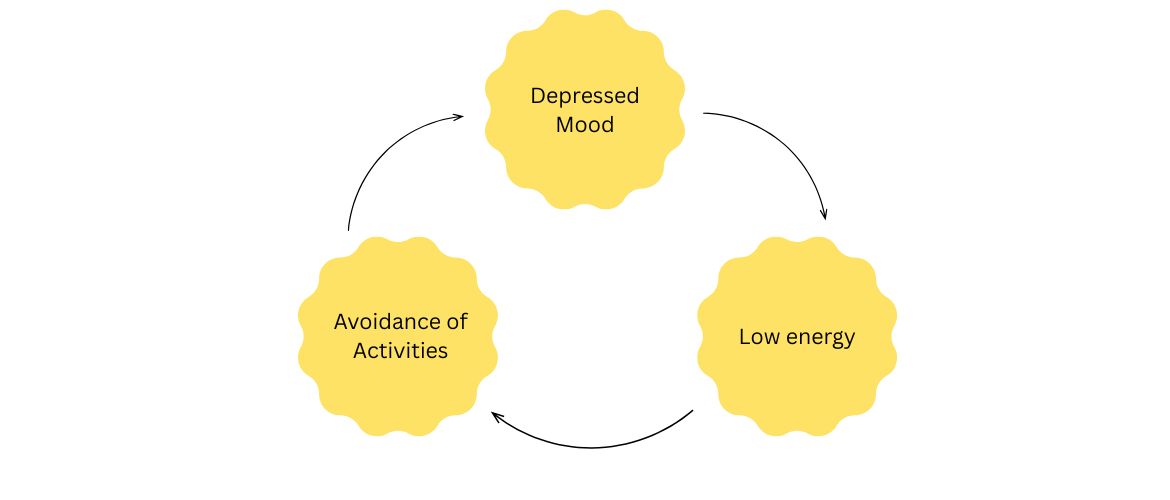
How to Write a Blog When Your Brain Does Not Want to and Other Behavioral Activations
The title is how I am feeling write now (yes, that was a pun. You may laugh). But sometimes you must do things you don’t want to do in order to gain the motivation to work on other tasks. The idea behind doing an action to gain motivation is called Behavioral Activation, or BA for short. Most people tend to think they will get motivated to do what they want to do, when the opposite is usually...Learn More
You’re Not a Fraud, You Just Have an Imposter Syndrome
Young professionals often face high expectations. While some are external, many are internal. One of the most prevalent silent struggles that occur during this phase of life include the overwhelming and exhausting impacts of imposter syndrome. Imposter syndrome is the persistent feeling that you’re not as competent at your job as others perceive you to be and that your success is due to...Learn More
Burnout: What is it and how can we heal?
Burnout has become a quiet epidemic among young professionals, with many people silently struggling with the constant pressure to perform and “keep up.” Often, burnout doesn’t show up in dramatic ways. It sneaks in slowly, showing up as apathy, self-doubt, and emotional exhaustion. Do you suffer from late-night anxiety spirals, Sunday dread, a sense of falling short despite...Learn More
Understanding EMDR Therapy: A Path to Healing
Eye Movement Desensitization and Reprocessing (EMDR) therapy is a psychological treatment designed to help individuals process and heal from traumatic experiences. Developed by Francine Shapiro in the late 1980s, EMDR is particularly effective for those suffering from post-traumatic stress disorder (PTSD). What is EMDR Therapy? EMDR therapy consists of eight phases that combine...Learn More
What is Obsessive Compulsive Disorder (OCD) Anyway?
You’ve most likely heard of obsessive-compulsive disorder (OCD), but how accurate is the information that you’ve been given? More often than not, the term OCD is used incorrectly. We see the “classic” germaphobe in TV and movies. People tend to say things like “I’m so OCD” when referring to their desire for things to be neat and orderly. In reality,...Learn More
What is Depression Anyway?
You may have heard of the word depression or depressed and noticed that it is used a lot these days. Depression is a common word that often is meant to describe sadness, rejection, feeling down, blue, empty, mentally fatigued, etc. While these can be a way to describe symptoms of depression, depression is way more than that. Depression is a mood disorder, not just an emotion. For example,...Learn More
Is Anxiety More Prevalent Today?
Why does it seem like more people have anxiety today, than even just 10 years ago? While anxiety is not “new”, many people have observed a significant increase in anxiety levels among individuals of all ages. Naturally, this raises questions. Let’s discuss some of the factors that are contributing to the idea that anxiety is more common today than in the past. Here is a brief list of the three...Learn More
Pop Psychology vs. Actual Psychology
The psychological terms and facts that you learn on social media can be very different when compared to actual psychological terms and facts. Let’s chat about the important differences, as well as the harm that comes from misusing (and misunderstanding) these concepts. Before we start, I want to define what “pop psychology” actually is. Short for popular psychology, self-help...Learn More