
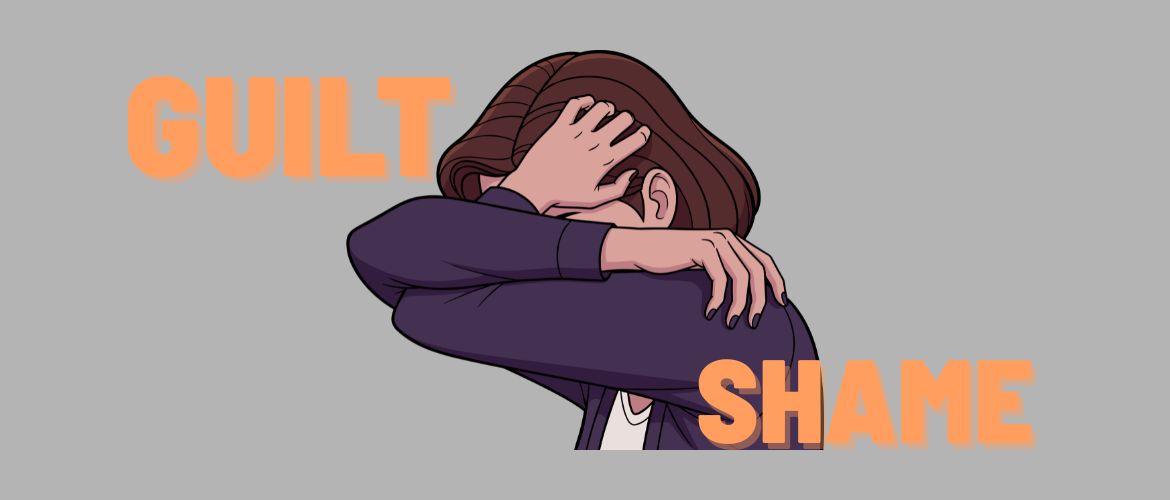
The Difference Between Guilt and Shame: Why It Matters
People often confuse shame and guilt or use them interchangeably. However, there are a few key differences, and it’s helpful to know what these differences are.
Why distinguishing between guilt and shame matters.
When it comes to guilt vs. shame, the details matter. Psychologically, these experiences are very different and lead to different outcomes. One allows us to move forward while the other keeps us stuck.
Guilt tells us that we did something bad, that we did something that goes against our morals or values. Shame tells us that we are bad.
Because guilt targets a specific behavior or action, it leaves room for learning and change. For example, maybe you broke a promise, or you lied to someone you care about. Guilt encourages accountability. It motivates communication and apologies.
Shame, on the other hand, goes much deeper. It attacks our identity, our self-worth. Shame often says, “I’m a terrible person” or “There’s something wrong with me. I don’t deserve anything good.” Instead of motivating change, shame often leads to avoidance, defensiveness, or even people-pleasing.
How we can begin to heal from shame.
This part takes a lot of practice and patience. When you notice self-criticism, ask yourself the following question: “Am I evaluating a behavior or am I attacking my character?”
If you are experiencing guilt, take the steps to repair and move forward. If it’s shame, it’s time to practice self-compassion.
Start by labeling the feeling. Try saying “I am feeling shame right now.” This is called cognitive diffusion, and it works by creating distance between our identity and what we are feeling. Detaching ourselves from our emotions allows us to see them as temporary mental events rather than absolute truth. You are not your feelings; you are having feelings.
Remind yourself that you are not your worst moment. Your worth is not defined by the mistakes you have made. You are imperfect and that is okay! That is the human experience.
Related Posts
How Do I Know if Someone Has Narcissistic Personality Disorder?
Do you or someone you know have narcissistic personality disorder (NPD)? The good...

Pop Psychology vs. Actual Psychology
The psychological terms and facts that you learn on social media can be very...